
Justice for CSS: The Fight for Recognition in Web Development
CSS is often dismissed as a mere decorative tool, but it has evolved into a complex language capable of building 3D engines. This underestimation is linked to gender stereotypes and a lack of visibility for its creator.
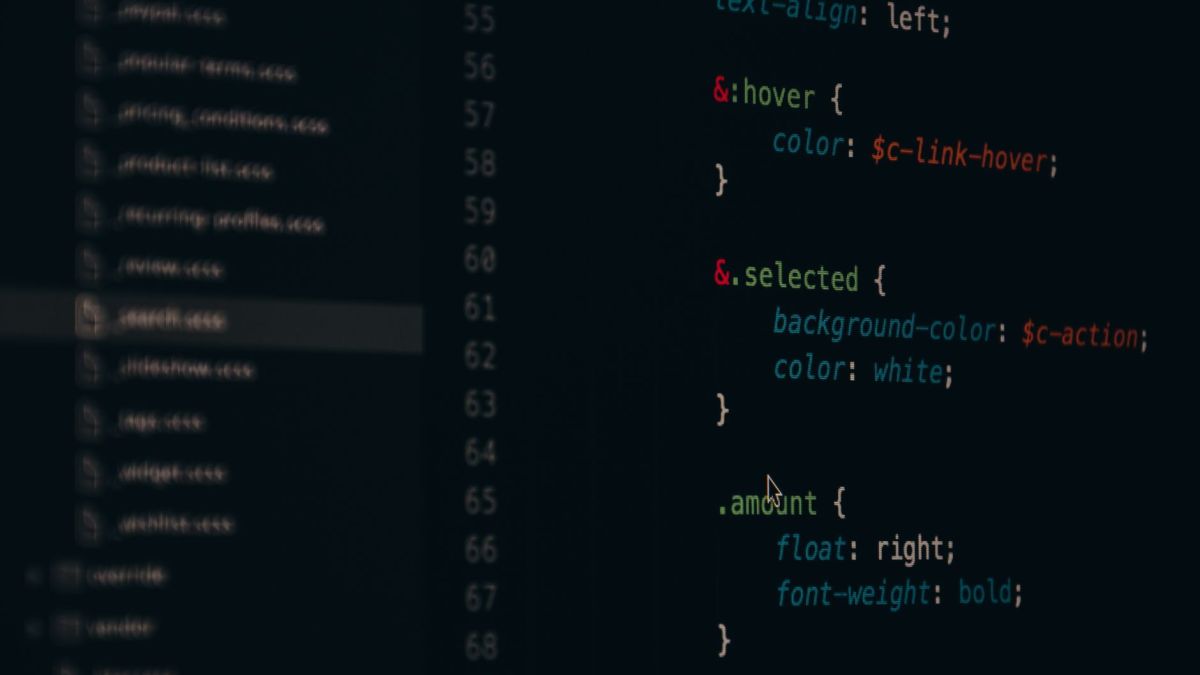
Cascading Style Sheets, known as CSS, is the language responsible for the visual identity of the internet, controlling everything from fonts and colors to complex animations. Despite its critical role in the 'holy ternary' of web development alongside HTML and JavaScript, CSS is frequently treated as a secondary or purely decorative discipline. This perception creates a divide in the tech industry, where the ability to style a page is often viewed as less rigorous than backend logic. The conversation around 'Justice for CSS' highlights how this technical dismissal intersects with gender bias and impacts everything from developer salaries to the visual diversity of the modern web.
Quick summary
- CSS has grown from about 50 properties in 1996 to at least 10 times as many today, enabling complex projects like 3D-rendering engines.
- The language is often stigmatized as 'feminine' or 'easy,' which can influence job interviews and salary expectations.
- Data from the State of CSS survey shows 11% women and 3% nonbinary respondents, compared to 6% women and 1% nonbinary in the State of JavaScript survey.
- The reliance on frameworks like Bootstrap and Tailwind has led to a homogenized 'fast fashion' aesthetic across many websites.
- Upcoming features such as if() conditionals and @function may further challenge the argument that CSS is not a legitimate programming language.

What happened
The debate over whether CSS qualifies as a 'real' programming language persists due to its unique nature; it does not have a compile step and does not throw runtime errors like other languages. Critics often point out that it is a style sheet language or a domain-specific language rather than a general-purpose one, noting that it is not Turing complete. However, the capabilities of the language have expanded drastically. While the 1996 specification featured roughly 50 properties, such as 'color' and 'font-size,' the current version is significantly more robust, including features like 'hanging-punctuation.'
These technical advancements have allowed developers to push the boundaries of what is possible without JavaScript. Examples include the re-creation of the game Doom entirely in CSS, the development of 3D-rendering engines, and the creation of holographic Pokémon cards. Cassidy Williams, who participated in the inaugural March MadCSS tournament, even built an experimental database-query engine using CSS. When demonstrating this at Microsoft Build, she was met with skepticism from emcees who, despite being seasoned programmers, snarked that she might be the only person who actually likes the language.
How we got here
The lack of prestige surrounding CSS may be linked to the visibility of its origins. While the creation of JavaScript by Brendan Eich at Netscape is a well-known piece of tech lore, the creator of CSS, Håkon Wium Lie, is less recognized. It is suggested that Lie's status as a Norwegian with a diacritic in his name, rather than being an American in Silicon Valley or a Brit like HTML inventor Tim Berners-Lee, might have played a role in this lack of recognition. This has contributed to a hierarchy where CSS is viewed as the 'decorative' element of the web.
The evolution of the web has also seen a shift toward standardization through frameworks. The era of Bootstrap and the subsequent 'Tailwind look' have created a homogenized aesthetic, which some describe as a form of 'fast fashion' for the internet. This trend has led to a 'grayification' of websites, similar to the loss of color in American car designs over the decades. Early adopters of CSS, such as WIRED, operated in an era before the existence of Flexbox, Grid, or @keyframes, meaning the language's power has grown exponentially in just the last ten years.
- 1996: Initial CSS specification released with approximately 50 properties.
- Last decade: Introduction of Flexbox, Grid, custom properties, and @keyframes for JS-free animations.
- Recent years: Addition of container queries, the :has() pseudo-class, and oklch() color spaces.
- Current development: Work on if() conditionals and @function to expand logic capabilities.

Who are the involved
The tension between frontend and backend roles often manifests in professional biases. Some backend engineers report feeling the need to distance themselves from frontend work to avoid being stereotyped. One engineer shared that despite having no interest in frontend work during her internship in San Francisco, she was immediately assigned a frontend role upon joining a company full-time. She noted that male engineers often doubted her technical knowledge until they worked with her on backend projects for several months.
Conversely, some initiatives use CSS as an inclusive entry point into technology. Kode With Klossy, a tech camp for young women and gender-expansive students started by Karlie Kloss, leverages the visual nature of CSS to attract students who might not otherwise be interested in coding. By focusing on the 'cool' and creative aspects of the language, the program helps students transition from a curiosity about aesthetics to a deeper interest in how software actually works.
What do the sources say
According to the State of CSS survey, 11 percent of respondents were women and 3 percent were nonbinary or gender-nonconforming. In comparison, the State of JavaScript report showed only 6 percent female and 1 percent nonbinary respondents. While these figures indicate a slightly higher presence of women and nonbinary individuals in CSS-related roles, the overall diversity remains low. This disparity reflects a broader industry trend where frontend work is more accessible to those who do not fit the 'nerdy-computer-boy' stereotype.
The perception of CSS as a 'feminine' language—associated with beauty and style—has tangible consequences. This bias can influence the skills tested in job interviews, the perceived value of a developer's expertise, and ultimately, their salary. The assumption that styling is 'Female Work' leads to a cycle where CSS developers are undervalued, despite the increasing complexity of the language and the critical importance of legibility and design for the end-user.

Explainer
CSS, or Cascading Style Sheets, is a style sheet language used to describe the presentation of a document written in HTML. The 'cascading' part of the name refers to the way the browser determines which styles apply to an element based on a hierarchy of rules. Unlike general-purpose programming languages, CSS is domain-specific, meaning it is designed for a particular task—styling—rather than for creating general software logic.
In the industry, 'frontend' refers to the client-side of an application—everything the user sees and interacts with in their browser. 'Backend' refers to the server-side, involving databases and server logic. While the two are distinct, they are interdependent. Terms like 'Turing complete' refer to a system's ability to simulate any Turing machine, a benchmark often used by programmers to decide if a language is 'real' programming, a standard CSS has traditionally not met.
Impacts and why it matters
The undervaluation of CSS affects more than just developer egos; it impacts the quality of the web. When styling is dismissed as mere decoration, accessibility for people with disabilities can be overlooked. CSS is essential for supporting right-to-left languages, such as Arabic and Hebrew, and for creating the smooth animations and gradients that improve user experience. A lack of investment in CSS mastery leads to the aforementioned 'grayification' of the web, where sites lose their unique identity in favor of generic frameworks.
Furthermore, the cultural bias against CSS reinforces barriers to entry in the tech field. By labeling the language as 'easy' or 'unserious,' the industry risks alienating talented individuals who are drawn to the intersection of design and logic. Recognizing CSS as a deep and capable language allows for a more inclusive environment where the skill of making a website functional and visually accessible is given the same professional respect as the logic that powers the server.

What comes next
The technical trajectory of CSS suggests it will only become more powerful. With the development of if() conditionals and @function, the language is moving closer to the capabilities of general-purpose programming. These updates may eventually silence the 'technically' based arguments used to dismiss CSS as a legitimate tool for software engineering.
Ultimately, CSS represents a form of 'end-user programming,' where software can be customized by the user. Much like spreadsheets, CSS allows a novice to create something useful quickly, while allowing experts to build highly complex systems. As the language continues to evolve, the push for its recognition reflects a broader need for the tech industry to value the full spectrum of frontend expertise.
Quick questions
What is the main argument for 'Justice for CSS'?
The argument is that CSS is unfairly dismissed as a purely decorative or 'easy' tool, despite its evolution into a complex language capable of advanced tasks like 3D rendering.
How does gender bias affect CSS developers?
CSS is often stereotyped as a 'feminine' language because it deals with style and beauty, which can lead to lower salaries and less professional respect compared to backend roles.
Is CSS a real programming language?
Technically, it is a style sheet or domain-specific language and is not Turing complete, but new features like if() conditionals are expanding its logical capabilities.
Sources consulted
- Justice for CSS — WIRED
Written with the help of artificial intelligence from the sources above. Found a mistake? Let our editors know.
Read next

Croatia vs Spain: Nations League preview, lineups and stakes
Croatia host Spain at Stadion Poljud in Split on Tuesday, October 6, in the UEFA Nations League 2026-27 Group A3. Spain arrive with a perfect record and a 41-match unbeaten run, while Croatia look to respond after their heaviest defeat in history.

MRVL stock: Marvell shows 2nm optical links, expands AT&S deal
Marvell Technology (MRVL) presented what it calls the industry's first 2nm optical interconnect demonstrations at ECOC 2026 and expanded its collaboration with AT&S to secure advanced IC substrate capacity for future AI and cloud infrastructure products.

Romania vs Sweden: Nations League Preview, Lineups and Odds
Romania hosts Sweden at Arena Nationala in Bucharest on Monday, October 5, with kickoff at 15:45, in a UEFA Nations League fixture. Sweden won the reverse match 2-1 ten days ago and is the bookmakers' favorite.