
NASA Spotlights the Largest Newly Formed Impact Crater in the Solar System
NASA scientists have discovered the largest newly formed impact crater in the solar system, created by an asteroid or comet strike on the Moon. Spotted by the Lunar Reconnaissance Orbiter, the massive formation provides unprecedented data for future lunar missions.
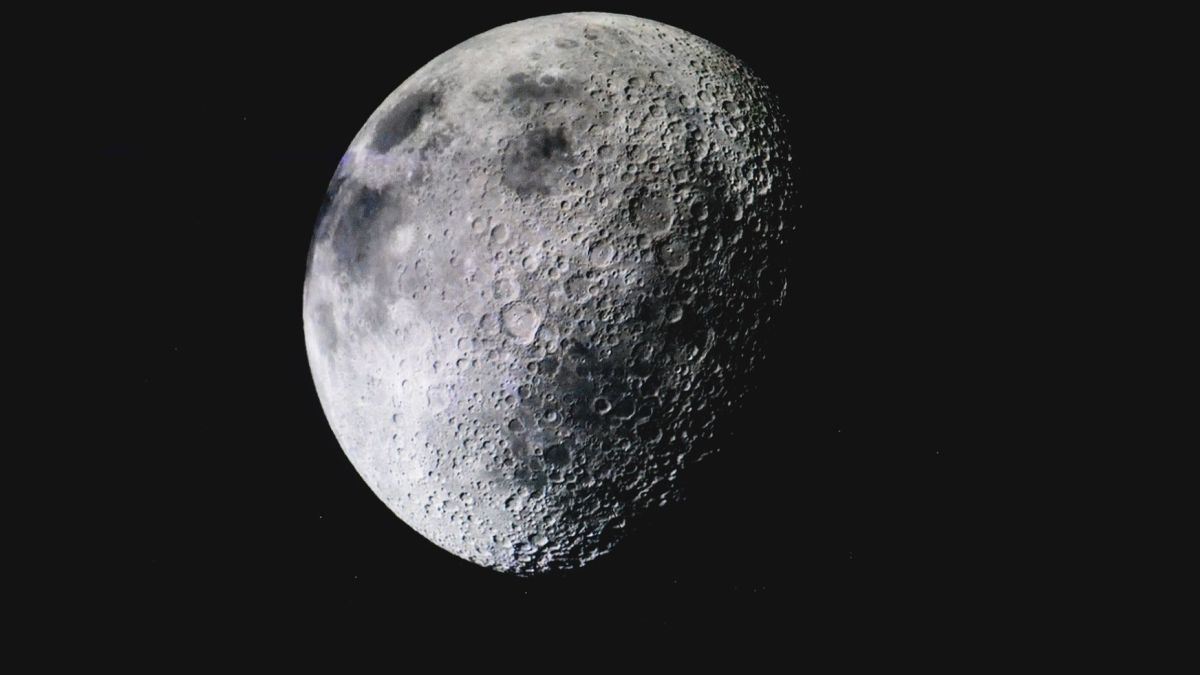
A routine data-quality check on global Moon maps has led to the discovery of the largest newly formed impact crater ever recorded in the solar system. The massive scar, measuring hundreds of feet wide and deep, was carved into the lunar surface by an incoming space rock, offering researchers a rare opportunity to study planetary collision mechanics in real time as the international space community prepares for sustained human exploration.
Quick summary
- A spacecraft data check revealed a massive new lunar crater named McGetchin, spanning 728 feet across.
- The crater formed on the Moon's eastern edge between April 11 and May 22, 2024, after a building-sized asteroid impact.
- Researchers estimate that such large-scale impacts happen on the lunar surface roughly once every century or more.
- Thermal imaging identified a four-mile-wide cold spot around the site, revealing unexpected changes to the surrounding topsoil density.
What happened
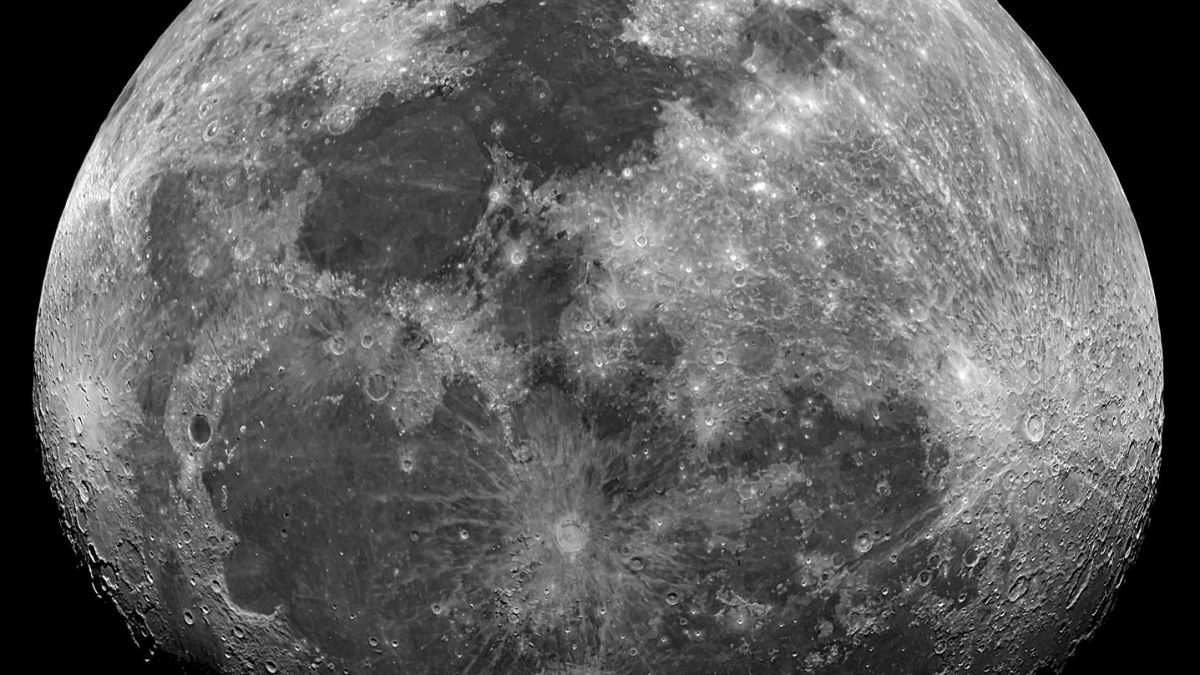
The unprecedented discovery began when Robert Wagner, an image-processing specialist working with data from the Lunar Reconnaissance Orbiter Camera, reviewed wide-angle global maps. The software highlighted an unusually large bright spot circled by a dark halo, which indicated that surface material had been violently displaced. Further analysis confirmed a funnel-shaped depression measuring 728 feet wide and up to 141 feet deep, making it the solar system's largest newly formed impact crater detected during an active observation campaign, according to NASA accounts.
The catastrophic event occurred inside a 41-day window between April 11 and May 22, 2024, when an asteroid or comet fragment roughly the size of a three- to six-story building struck the eastern near side of the Moon. The strike itself went undetected in real time by telescopes on Earth or in space. The impact distributed a vast blanket of debris, hurling rocky soil and hurling ejecta fragments across a distance of more than 60 miles from the origin point, with some finer material clearing high ridges nearby.
How we got here
For more than seventeen years, NASA's Lunar Reconnaissance Orbiter has continuously mapped the lunar topography, temperature, and radiation environment using its suite of onboard instruments. The mission has successfully cataloged at least 1,000 new impact craters and thousands of surface alterations since its launch, though previous discoveries were significantly smaller, with the former record-holder measuring roughly 70 meters across. The newly identified feature was officially named McGetchin in honor of the late lunar scientist Tom McGetchin, following two detailed studies published in Science Advances.
Chronology of the discovery and event:
- April 11 to May 22, 2024: An asteroid or comet fragment strikes the Moon's eastern edge, forming the McGetchin crater without real-time detection.
- August 2025: Wide-angle orbital imagery capturing the impact footprint is identified during a routine data-quality review.
- October 24, 2025: Researcher Robert Wagner formally flags the distinctive bright spot and dark halo while stacking global lunar maps.
- November 2025 through early 2026: High-resolution narrow-angle imaging and thermal measurements confirm the crater dimensions and surrounding cold anomaly.
Who are the involved parties
The discovery is the culmination of extensive collaborative work by planetary scientists, image-processing specialists, and academic institutions participating in NASA's lunar exploration program. Robert Wagner, affiliated with Intuitive Machines, led the initial visual identification while operating analysis software connected to the Lunar Reconnaissance Orbiter Camera system. Mark Robinson, chief scientist for the camera payload, and various university researchers co-authored the formal scientific findings detailing the geological implications of the strike.
Additionally, thermal data was gathered and interpreted by researchers utilizing the Diviner instrument team, including co-author David Paige from the University of California, Los Angeles. These specialists worked in concert to correlate visual surface alterations with thermodynamic properties, shedding light on how high-energy projectiles modify planetary regolith. The collective findings were presented to the scientific community through peer-reviewed publications and official agency announcements.
What the sources say
According to NASA researchers, the impact released an immense amount of energy, calculated at approximately 6.5 times ten to the tenth power kilojoules, assuming a high impact speed and projectile density. This energy release is estimated to be significantly greater than previous modern impacts recorded by orbiters. Experts emphasize that the event represents a statistically rare observation that enhances understanding of how high-energy space rocks interact with planetary bodies devoid of thick atmospheres.
Furthermore, thermal observations conducted by the Diviner instrument revealed a four-mile-wide cold spot centered on the crater, where nighttime temperatures drop notably lower than adjacent terrain. Researchers attribute this anomaly to the de-compaction of the topsoil, or regolith, caused by the violent shockwave. This loosening process alters how lunar soil retains heat, providing a physical marker that helps scientists date and evaluate similar geological structures across the Moon.

Explainer
Regolith is the layer of loose, heterogeneous superficial deposits covering solid rock on planetary bodies like the Moon, consisting of dust, broken rocks, and soil formed by millions of years of meteorite impacts and space weathering. Without a substantial atmosphere to slow down or burn up incoming space debris, planetary surfaces are continuously bombarded by objects ranging from microscopic dust particles to massive asteroids.
Orbital remote sensing instruments utilize specialized camera systems and thermal radiometers to detect minute changes in topography and surface temperatures. By comparing historical mosaics with contemporary imagery, planetary scientists can isolate surface alterations, measure the volume of ejected material, and calculate the frequency of high-energy cosmic collisions across the solar system.
Impacts and why it matters
The confirmation of the McGetchin crater provides vital data for space agencies as international efforts advance toward establishing sustained human infrastructure and base camps on the lunar surface. Understanding the frequency, energy, and distribution of ejecta from major asteroid impacts allows engineers to better assess structural risks and design hardened habitats that can withstand falling debris.
Moreover, studying how impacts churn and garden the lunar topsoil offers new insight into the geological evolution of planetary crusts. Researchers note that the rapid overturning of surface material influences everything from long-term preservation studies of historical landing sites to the physical interaction between robotic rover wheels and the loose lunar terrain.

What comes next
Scientists plan to conduct further detailed analyses of high-resolution images to refine precise estimates of the original impactor's exact dimensions and velocity vector. Future research papers are expected to model the ballistic trajectories of the heavy debris fields to map potential secondary impact hazards relative to planned exploration zones.
Concurrently, the Lunar Reconnaissance Orbiter will continue its polar mapping operations, scanning for further surface modifications and monitoring the gradual thermal evolution of the newly discovered cold spot. These ongoing observations will help refine statistical models governing impact rates across the inner solar system.
Quick questions
What is the McGetchin crater?
It is the largest newly formed impact crater discovered in the solar system, measuring 728 feet across and 141 feet deep, created by a major asteroid strike on the Moon.
When did the asteroid impact happen?
The strike occurred within a 41-day window between April 11 and May 2024, though it was not detected by telescopes in real time.
Why does the crater have a cold spot around it?
Thermal instruments discovered that the impact decompacted the surrounding topsoil, making the loose material less capable of retaining heat during the lunar night.
Sources consulted
- NASA’s Moon Orbiter Spots New, ‘Once-in-Century’ Moon Crater — NASA Science (.gov)
- NASA spacecraft discovers moon crater bigger than Roman Colosseum — CBS News
- A routine quality check on a Moon map turned up a bright spot ringed by a dark halo, and it marked a 222-metre crater that did not exist before spring 2024, the — Space Daily
Written with the help of artificial intelligence from the sources above. Found a mistake? Let our editors know.
Read next

Croatia vs Spain: Nations League preview, lineups and stakes
Croatia host Spain at Stadion Poljud in Split on Tuesday, October 6, in the UEFA Nations League 2026-27 Group A3. Spain arrive with a perfect record and a 41-match unbeaten run, while Croatia look to respond after their heaviest defeat in history.

MRVL stock: Marvell shows 2nm optical links, expands AT&S deal
Marvell Technology (MRVL) presented what it calls the industry's first 2nm optical interconnect demonstrations at ECOC 2026 and expanded its collaboration with AT&S to secure advanced IC substrate capacity for future AI and cloud infrastructure products.

Romania vs Sweden: Nations League Preview, Lineups and Odds
Romania hosts Sweden at Arena Nationala in Bucharest on Monday, October 5, with kickoff at 15:45, in a UEFA Nations League fixture. Sweden won the reverse match 2-1 ten days ago and is the bookmakers' favorite.