
World model companies are keeping a lot of secrets in AI
Major artificial intelligence developers focused on spatial intelligence are keeping strict secrets about their commercial products and roadmaps. Startups and suppliers report that maintaining a low profile helps prevent potential rivals from entering the exact same competitive niches too early.
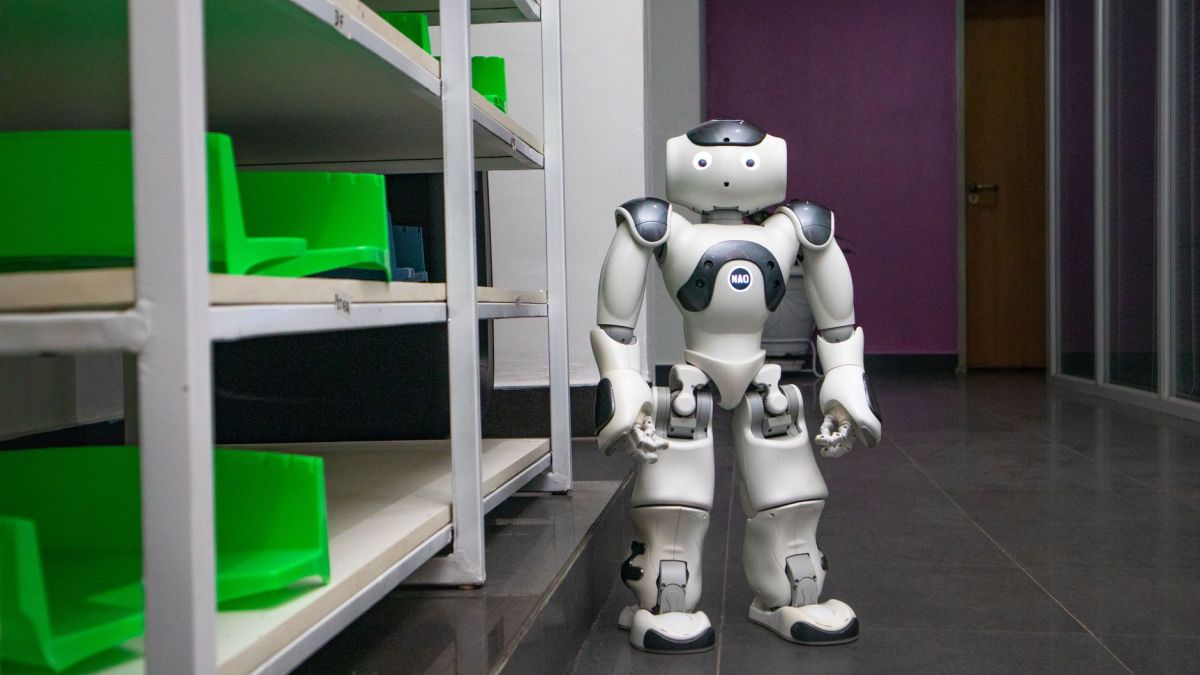
Major artificial intelligence developers focused on spatial intelligence are deliberately keeping a lot of secrets regarding their commercial products, internal roadmaps, and specific timelines. During a recent panel at the All In conference, industry leaders and researchers discussed how prominent firms in the sector maintain low profiles despite accumulating substantial buzz and financial backing. This calculated discretion spans across several emerging startups and even affects their immediate data suppliers, creating an aura of mystery around the future of spatial computing and automated intelligence.
Quick summary
- Leading world model firms are keeping details about their products and commercial timelines strictly confidential.
- Startups like AMI Labs and World Labs have secured significant funding while remaining in exploratory research phases.
- Data suppliers report being left in the dark about how their datasets are utilized in final product development.
- Keeping a low profile helps prevent potential rivals from entering the exact same competitive niches too early.

What happened
Recent discussions at major technology industry events highlighted a prevailing trend among emerging artificial intelligence organizations. While participating in a panel dedicated to spatial intelligence, executives from prominent firms were pressed regarding the practical commercialization of their underlying technology. Rather than outlining specific consumer applications or release schedules, representatives emphasized that their organizations remain firmly entrenched in the foundational research and building phase. This deliberate vagueness leaves observers and industry participants guessing about the actual practical implementations currently underway inside these secretive laboratories.
The shroud of secrecy extends beyond the primary research laboratories and directly impacts external partners who contribute to the ecosystem. According to interviews with suppliers in the artificial intelligence data sector, vendors provide crucial resources without knowing the precise nature of the end products being constructed. Data providers acknowledge that while their contributions clearly support advanced modeling efforts, a lack of transparency from developers prevents them from optimizing their services. Consequently, suppliers must navigate an information vacuum while supporting these developing technological endeavors.
How we got here
The rapid rise of spatial intelligence technology stems from foundational breakthroughs in artificial intelligence research aimed at replicating physical navigation and spatial awareness. Over recent years, academic and private laboratories began exploring how neural networks could interpret physical environments similarly to human perception. Early iterations primarily served autonomous driving systems, allowing vehicles to map and react to dynamic surroundings in real time. As computational power increased, researchers realized these same architectural frameworks could theoretically simulate physics, generate interactive media, and control physical robotics.
As investor interest surged around generative systems and embodied intelligence, capital flowed freely into specialized startups aiming to build comprehensive spatial representations of physical reality. AMI Labs, co-founded by industry figures including Michael Rabbat, established operations alongside established peers like Fei-Fei Li’s World Labs. These entities successfully secured substantial financial backing from investors eager to capture the next wave of artificial intelligence innovation. However, the ease of fundraising also introduced new strategic considerations regarding intellectual property protection and competitive advantage.

Who the involved parties are
The evolving sector involves several high-profile research laboratories, prominent academic founders, and specialized supply chain partners. AMI Labs operates as a primary player in the space, featuring leadership figures such as Michael Rabbat, who serves as the company’s vice president of world models. Another central organization is World Labs, spearheaded by prominent computer science researcher Fei-Fei Li, which has developed demonstration platforms like Marble. These organizations interact with various commercial entities, manufacturing partners, and third-party data suppliers such as Physicl, led by chief executive Alex de Vigan.
The broader ecosystem also encompasses established technology giants and venture capital investors who provide the financial runway for these early-stage ventures. While dominant firms focus primarily on large language models and reasoning systems, specialized world model startups concentrate specifically on spatial reasoning and physical simulation. The interplay between these diverse market participants creates a complex web of cooperation and underlying rivalry, as suppliers and developers attempt to navigate an industry defined by rapid advancement and strategic ambiguity.
What the parties say
Representatives for leading artificial intelligence developers maintain that their current operational focus justifies a high degree of confidentiality. When questioned about specific product roadmaps during industry panels, Michael Rabbat of AMI Labs stated that the organization would share details publicly only when fully prepared. In subsequent communications, Rabbat reiterated that the company remains strictly within a research and building phase, making public timelines and product declarations premature.
In contrast, supply chain partners express a desire for greater transparency from the developers utilizing their resources. Alex de Vigan, chief executive of data supplier Physicl, noted that clearer communication regarding project goals would allow vendors to deliver more targeted and valuable datasets. De Vigan remarked during industry discussions that knowing specific application targets would enable suppliers to refine their data collection processes, yet organizations currently keep their developmental directions closely guarded.
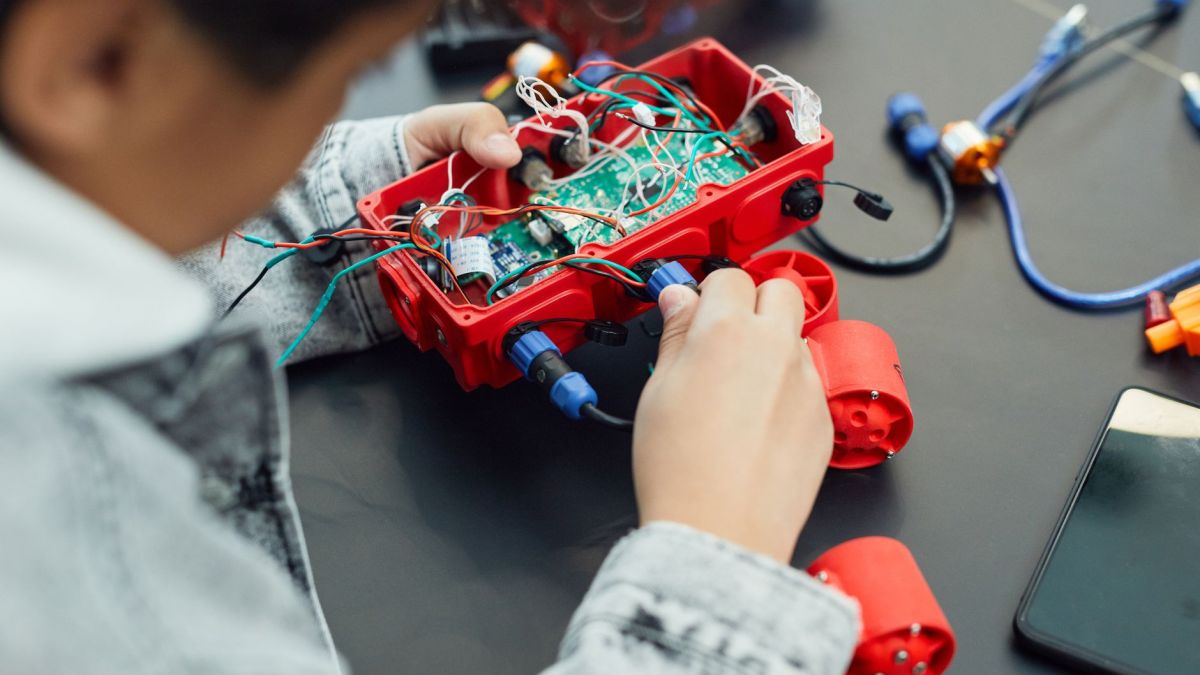
Explainer
World models represent a specialized category of artificial intelligence designed to understand, predict, and simulate the physical mechanics of the real world. Unlike traditional language models that process text and code, world models focus on spatial intelligence, physics, and multidimensional environments. By synthesizing visual and spatial data, these systems aim to create navigable digital representations of physical spaces. Such technology underpins advanced autonomous navigation, robotics coordination, and interactive simulation environments used in gaming and CGI production.
The underlying architecture relies on processing vast quantities of spatial data to anticipate how physical objects interact over time. In practical terms, this allows software to predict the trajectory of moving objects, simulate lighting and environmental physics, or guide humanoid robots through complex physical tasks. Because these modeling techniques are exceptionally versatile, the same foundational technology can theoretically be adapted for manufacturing, biomedicine, healthcare diagnostics, and interactive media rendering.
Impacts and why it matters
The widespread secrecy surrounding spatial intelligence development carries significant strategic implications for the broader technology sector. By maintaining a low profile, emerging laboratories minimize the risk of prematurely alerting well-funded competitors to their exact commercial targets. Industry observers compare this dynamic to a strategic survival scenario, where revealing capabilities too early invites aggressive competition from established tech giants and newly formed market rivals. Consequently, deliberate silence serves as a protective mechanism against premature market encroachment.
Furthermore, the versatility of spatial modeling technology means that successful commercial applications could disrupt multiple industries simultaneously, ranging from industrial robotics to cinematic rendering. Because fundraising conditions currently remain favorable for foundational research, startups face little immediate financial pressure to commit to a single commercial vertical. This flexibility allows organizations to refine their core technology across diverse fields such as manufacturing and healthcare before deciding on a definitive market strategy.

What comes next
As foundational research progresses, market participants anticipate that laboratories will eventually transition from secretive development to public product announcements. Industry events scheduled throughout the year, such as upcoming technology expositions and developer conferences, serve as primary venues where startups may begin unveiling concrete commercial applications. Observers note that as soon as the pathway to monetization becomes clearer across specific sectors like robotics or interactive video, the veil of secrecy is expected to lift naturally.
In the interim, data suppliers and industry partners will continue supporting research initiatives while monitoring for shifts in corporate strategy. As competing laboratories secure additional funding and refine their technological capabilities, the inevitable emergence of commercial products will likely ignite a new wave of competition across the artificial intelligence landscape. Until that juncture arrives, foundational developers are expected to maintain their cautious stance to protect their strategic positions within the marketplace.
Quick questions
What are world models in artificial intelligence?
World models are specialized AI systems designed to understand, predict, and simulate the physical mechanics and spatial dimensions of the real world.
Why are world model companies keeping secrets?
Companies keep their projects secret to avoid alerting potential competitors and well-funded rivals to their specific commercial targets too early.
Who are the key players in the world model space?
Prominent entities include AMI Labs, co-founded by Michael Rabbat, and World Labs, spearheaded by Fei-Fei Li.
Sources consulted
- World model companies are keeping a lot of secrets — TechCrunch
Written with the help of artificial intelligence from the sources above. Found a mistake? Let our editors know.
Read next

Eric Schmidt and Mastercard Back AI Platform Mona
Mona has raised $3.5 million to scale its AI platform that helps U.S. small businesses access capital and financial coaching. The round included participation from former Google CEO Eric Schmidt and the Mastercard Strive USA Innovation Fund.

Croatia vs Spain: Nations League preview, lineups and stakes
Croatia host Spain at Stadion Poljud in Split on Tuesday, October 6, in the UEFA Nations League 2026-27 Group A3. Spain arrive with a perfect record and a 41-match unbeaten run, while Croatia look to respond after their heaviest defeat in history.

MRVL stock: Marvell shows 2nm optical links, expands AT&S deal
Marvell Technology (MRVL) presented what it calls the industry's first 2nm optical interconnect demonstrations at ECOC 2026 and expanded its collaboration with AT&S to secure advanced IC substrate capacity for future AI and cloud infrastructure products.